BD Phoenix M50
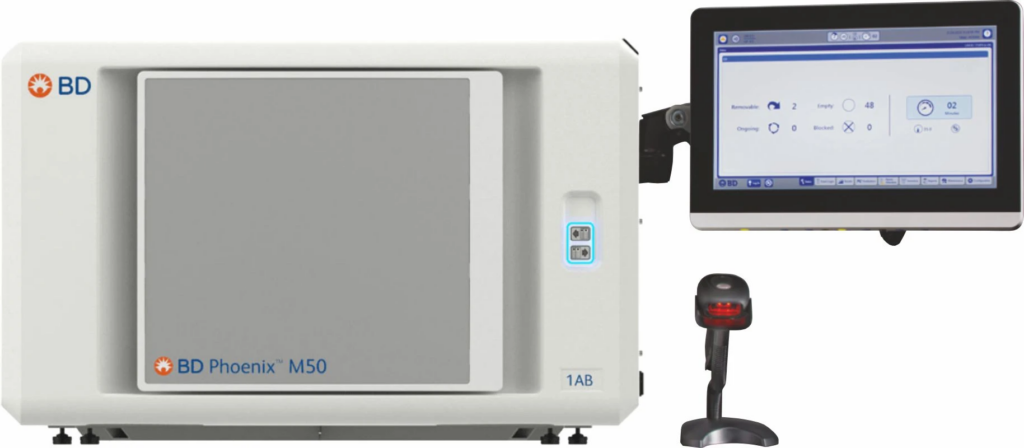
BD Phoenix M50 Microbiological Analyzer
Becton Dickinson presents the Phoenix M50 microbiological analyzer – a system for the rapid identification and antimicrobial susceptibility testing of clinically significant bacteria.
The Phoenix M50 system for microorganism identification and antimicrobial susceptibility testing is rightfully considered the most reliable and fastest system for the phenotypic detection of microorganism resistance to antibiotics.
Identification
One of the primary requirements for optimal patient treatment, infection control, and monitoring the development of antimicrobial resistance is high accuracy in microorganism identification in the shortest possible timeframe.
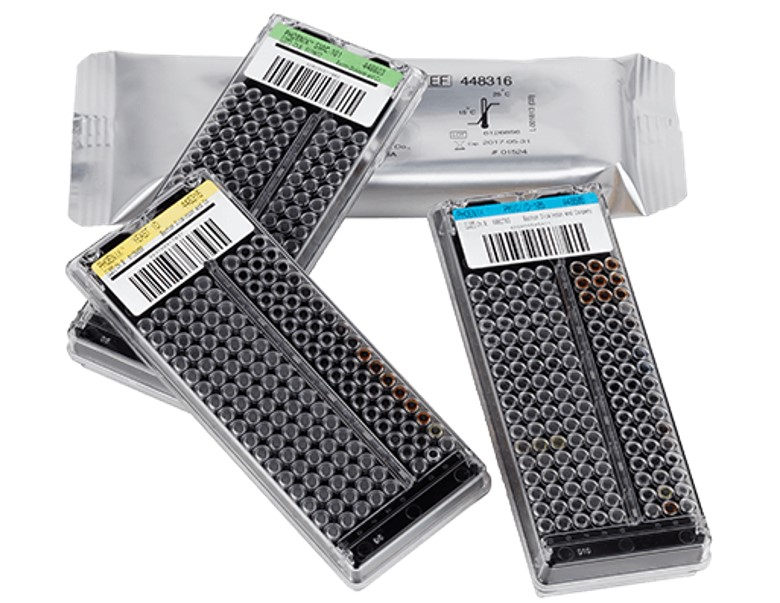
- Identification is based on the use of 45 chromogenic and fluorogenic substrates.
- No reagent addition or additional testing is required, saving time and money.
- Databases on the time-dependent activity of microorganisms ensure high identification accuracy.
- Possibility of use in antibiotic susceptibility mode only in cases where other identification technologies are used (mass spectrometry, etc.).
- Approximately 400 taxa: Gram-negative, Gram-positive bacteria, fungi.
- Final identification result in 3–5 hours for bacteria and 4–12 hours for fungi.
Antimicrobial Susceptibility Testing (AST)
- From 18 to 30 drugs per panel: first-line, second-line, alternative, and reserve drugs.
- The BD Phoenix system is capable of confirming the presence of ESBL (Extended-Spectrum Beta-Lactamase) in panels for Gram-negative bacteria.
- Differentiated reactions of third-generation cephalosporins in the presence and absence of clavulanic acid, which is a beta-lactamase inhibitor.
- Detection of E. coli, K. pneumoniae, and K. oxytoca.
- Obtaining results on the presence of ESBL.
- BD Phoenix is the first automated system to include MRSA (Methicillin-Resistant Staphylococcus aureus) detection for cefoxitin and oxacillin.
- BD Phoenix possesses capabilities for detecting KPC producers (Klebsiella pneumoniae carbapenemase) in Enterobacteriaceae.
- The BD Phoenix system shows the best results in detecting the iMLSb phenotype (inducible resistance to Macrolide–Lincosamide–Streptogramin B) in streptococci and staphylococci (these 3 antibiotic groups are included in all panels for Gram-positive bacteria).
Other resistance markers detected by the BD Phoenix system:
HLAR: High-Level Aminoglycoside Resistance in Enterococcus.
Double beta-lactamase test (with nitrocefin and by penicillinase production) for Staphylococcus spp.
VRSA: Vancomycin-resistant Staphylococcus aureus.
VRE: Vancomycin-resistant Enterococcus.